
PCB (Printed Circuit Board) Design is no easy task. It includes a variety of tasks that must be achieved to complete a design and make it a marketable product. The following are some of the areas that must be considered when building or planning to develop a printed circuit board design product.
Engineering Design
Engineering design involves many things that work together to create a marketable product. Engineering usually involves a term that refers to a technical creation process that involves many different skills and tools. Therefore, it is difficult to take on this entire process by yourself if you are working on a computer design. Creating a prototype for your design is what you should focus on if you are a computer designer or inventor. Then you can pass your basic design onto a professional PCB designer who can finish your prototype and focus on fine-tuning your design.

CAD Layout
CAD is the standard that is used for engineering design with technology and many other industrial products. CAD stands for “Computer-aided design.” You need this technology if you are working on a prototype that you need to create in a product that you intend to market professionally. The hand-made design is rare these days because it was discovered a long time ago that computers could correct the human errors that are often made due to forgetfulness or oversight on the part of a human. The software that is used in a CAD design is often costly to purchase and difficult to expand on if you are running a small business or operation. You need the resources and tools that are only available in a large scale operation that will allow you to create a usable product that can be marketed for a profit. Expert designers often can be found with design firms that focus only on the professional design and expert engineering techniques that you can find with a professional design team.
Precision and Detail
In the realm of business operations, there exists a fascinating parallel between PCB (Printed Circuit Board) design and janitorial services, both revolving around precision and meticulous attention to detail. Just as PCB design demands a meticulous layout of intricate electronic components to ensure seamless functionality, janitorial services require a precise choreography of cleaning tasks to maintain a pristine and hygienic environment. PCB design engineers meticulously plan the placement of components on a circuit board, carefully considering the interconnections, power distribution, and signal integrity. Their focus on every trace and component alignment is akin to a janitor’s meticulous approach to each nook and cranny when cleaning. Just as a well-designed PCB results in an efficient and reliable electronic device, a flawlessly executed janitorial service ensures a clean, inviting, and safe environment for inhabitants and visitors.
Moreover, the optimization of resources and materials is a common thread between these seemingly disparate fields. PCB designers aim to minimize waste and maximize the utility of limited board space, often employing advanced techniques like surface mount technology (SMT). Similarly, janitorial services seek to use resources efficiently by selecting the right cleaning products and methods to reduce environmental impact. The synergy between precision and resource optimization in PCB design and janitorial services highlights the significance of meticulous planning and execution, whether it’s in the world of cutting-edge technology or the everyday maintenance of our physical spaces. These interconnected facets of business underscore the importance of detail-oriented expertise, transcending industries to create optimal outcomes.
Types of Printed Circuit Boards
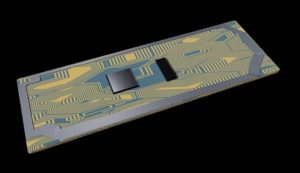 Printed circuit boards come in different types and serve a variety of needs. A single or one layer board is the most common type, and it involves placing a single copper layer on a board’s surface known as a substrate. A simple electronic toy uses a mono-sided PCB since it has few components fitted on its available side. Subsequent developments introduced the two-layer and multilayer PCBs, which utilize more than one copper layer placed on more than one substrate layer.
A large-sized circuit uses a two-layered PCB with strips of a copper circuit on the two sides for necessary connections. A PCB with four layers has two layers on the inner side for the component’s power and ground connections and the two outer layers are for wiring between its components. Laptops and PCs have a lot of ICs with hundreds of interconnections. Their solution is a large and complex circuit that occupies a small space.
Multi-layer printed circuit boards with traces thinner than a single human hair and over 50 layers of copper is the ideal choice. The invention of multi-layered boards allowed for the adding of components with a much higher density to the board, allowing for more powerful devices. The most common substrate used today is epoxy-fiberglass. Teflon or phenolic paper may also be used in circumstances where epoxy isn’t the best option for printed circuit boards.